Client Name
Viadux, Manchester
Type of Works Completed
Phase I Desk Study, Phase II Intrusive Investigation, Piling Risk Assessment, Remediation Strategy, Construction Monitoring, Grouting Works, Remediation and Verification Works.
Project Overview
The overall Viadux development in Manchester comprises the construction of a 39-storey residential tower, a 76-storey residential tower, a connecting podium structure, and conversion of the 1870s Grade II listed masonry viaduct. The towers and podium were to be constructed over the existing viaduct.
Our Approach
We undertook a programme of intrusive ground investigation to refine the site’s geological and geotechnical understanding. We reviewed borehole data to confirm consistency in rock strength parameters and soil–rock interfaces, enabling us to develop a robust ground model to inform geotechnical design.
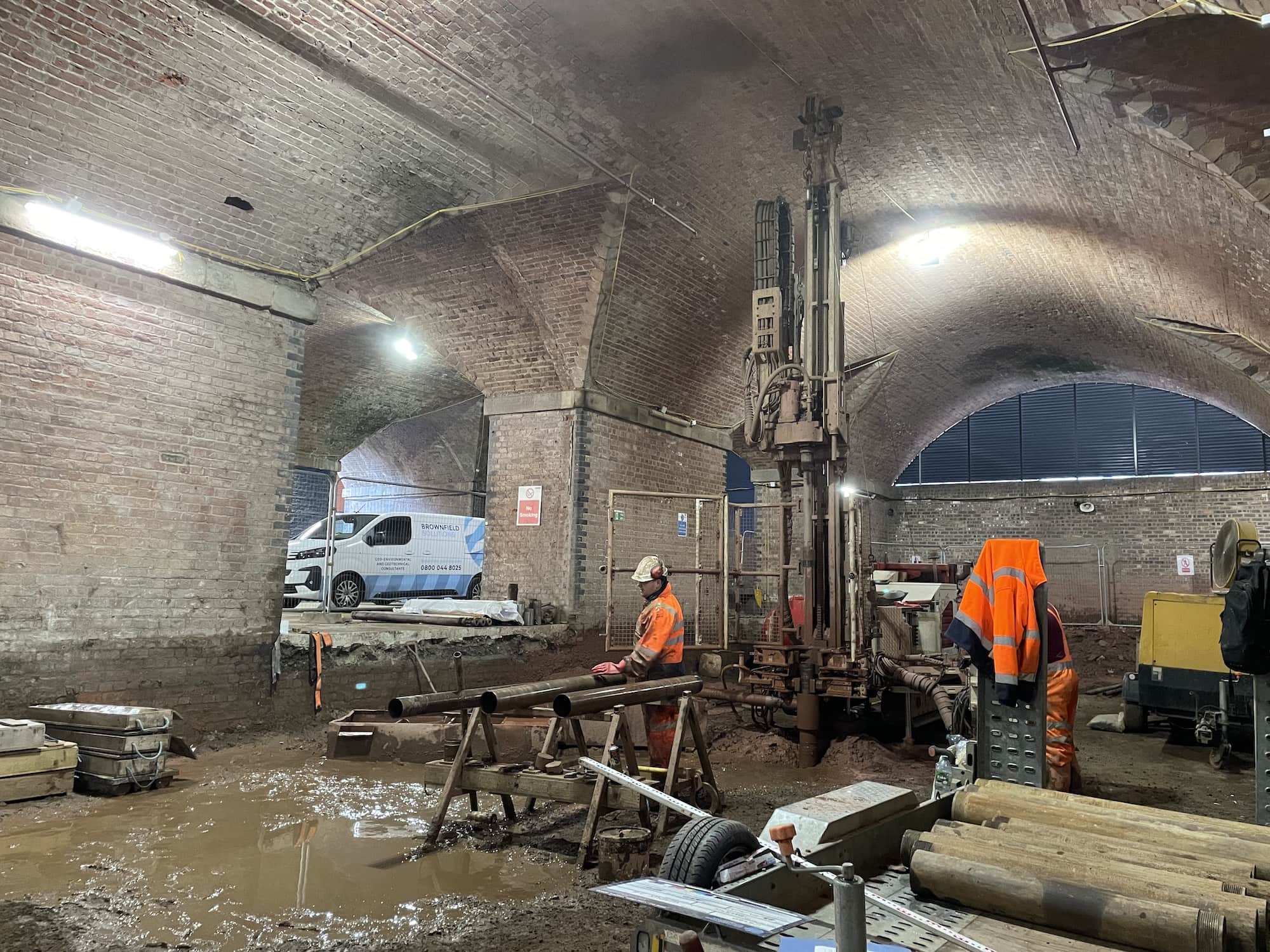
We also completed targeted investigations around the Victorian viaduct piers to assess the nature and condition of historic-made ground arisings. Initial probing confirmed very loose, highly porous material, posing a risk to structural stability and requiring further intervention.
In parallel, geo-environmental risk assessments were progressed across multiple phases of the development, adopting a pragmatic, whole-site approach that recognised differing land uses and phasing constraints while maintaining a clear focus on risk control and material re-use.
The Solution
BSL recommended a piled raft foundation solution for the development. BSL designed and implemented a drill-and-grout stabilisation strategy around each viaduct pier to further stiffen soils below the raft. BSL fully verified the works.
BSL developed bespoke remediation strategies for each phase of the site, tailored to the identified risks and proposed end uses. These strategies prioritised retaining and reusing materials on site wherever feasible, reducing disposal volumes and supporting sustainable development objectives.
Outcome
BSL’s intrusive investigations enabled the design of a bespoke foundation solution for the development, which involved a piled raft coupled with compaction grouting of the loose Victorian-made ground surrounding the viaduct piers.
The phased geo-environmental assessments and remediation strategies ensured the site was safe and suitable for its intended uses, while maximising material re-use and protecting land value. The approach gave the client and wider project team confidence that geotechnical and environmental risks were managed proportionately, robustly, and in line with best practice.