Client Name
Salboy
Type of Works Completed
Phase I Assessment.
Mining Risk Assessment.
Phase II Site Investigation.
Remediation Strategy.
Earthworks watching brief.
Clean cover validations.
Project Overview
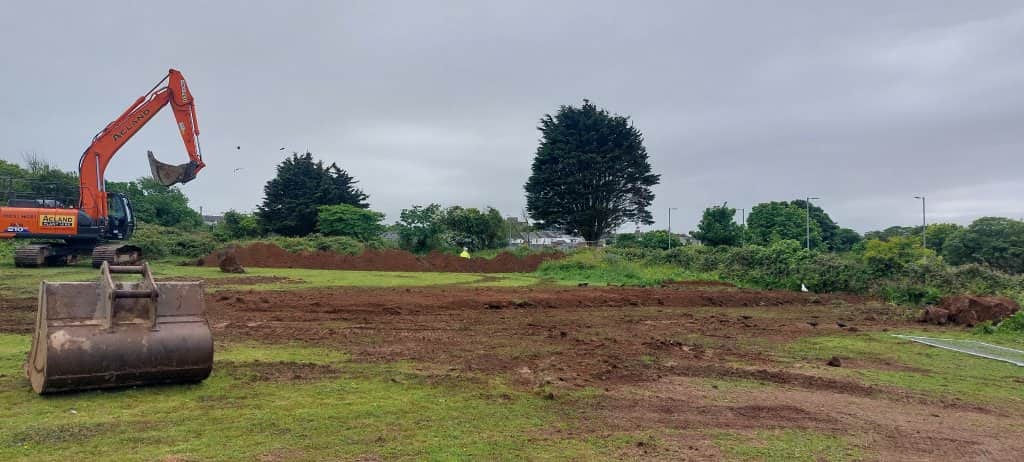
Redevelopment of an 8-hectare former industrial and mining site at Tuckingmill, Camborne, for 296 residential dwellings, retail/commercial units, highways, SuDS features, and public open space.
The site has a complex legacy including fuse works, multiple mining features, an infilled quarry, and widespread Made Ground containing asbestos, PAHs, and elevated heavy metals (notably arsenic).
Our Approach
The investigation combined a range of complementary techniques, including trial pitting, boreholes, targeted mining feature trenches and gas monitoring to develop a robust and representative ground model. Characterisation of soil, contamination, and assessment of risks associated with historic mining activity was undertaken alongside testing of key geotechnical properties.
Bioaccessibility testing was used to further investigate high levels of naturally occurring heavy metals and the potential effects on human health.
Additional in-situ testing – including infiltration testing, plate load testing and other ground assessments – was carried out to inform foundation design, drainage strategy and adoptable road construction. All data were integrated to assess the suitability of the site for residential development and to identify areas requiring mitigation.
The Solution
Mitigation measures tailored to the varying ground conditions and risks across the site were determined. Areas affected by historical industrial activity and quarry backfilling were identified, with elevated concentrations of arsenic, PAHs and isolated asbestos informing the need for clean cover systems and appropriate soil management measures to protect future residents.
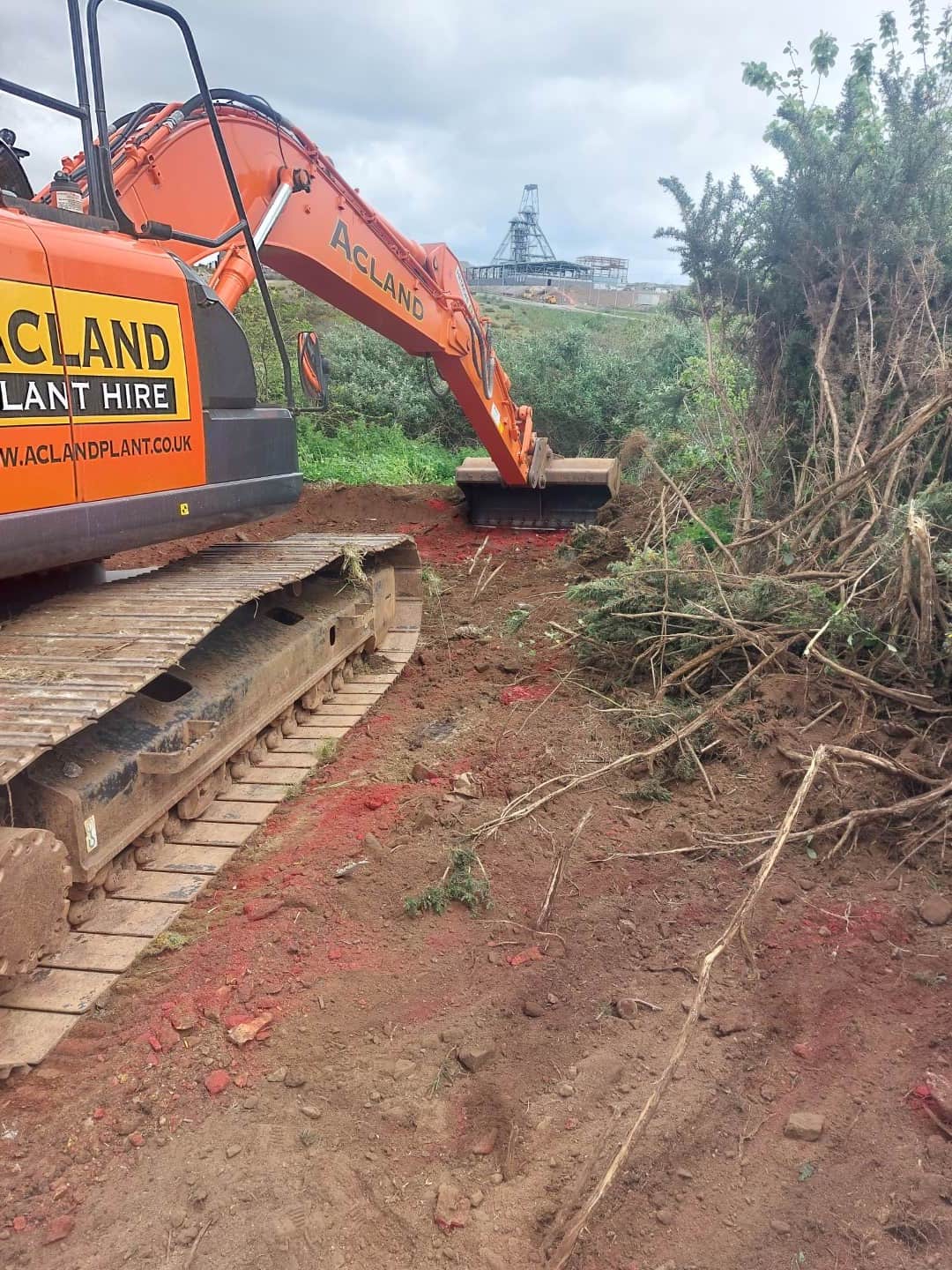
Historic mining features, particularly within the southern part of the site, were delineated and assessed, allowing targeted engineering solutions to be developed to manage ground stability risks. Ground gas monitoring confirmed that standard protection measures were appropriate in the northern areas, while enhanced gas protection was required locally in the south due to elevated readings associated with an infilled mineshaft.
Foundation solutions were defined across the site, ranging from reinforced strip foundations to piled foundations with the requirement for suspended floor slabs and radon protection measures, together with clear guidance for drainage design and road construction based on measured infiltration rates and CBR values.
Outcome
The investigation delivered a clear and defensible understanding of ground conditions, contamination levels and mining constraints across the site enabling development of a well-structured solutions and engineering framework that supported efficient design of foundations, drainage, remediation and earthworks.
Overall, the assessment provided the client and design team confidence that the site could be redeveloped sustainably, safely and efficiently, with risks appropriately managed and land value optimised.