Client Name
Confidential
Type of Works Completed
Phase I Desk Study, Phase II Intrusive Investigation, including for PFAS, ongoing Remediation & Verification. Hydrocarbon vapour, sampling and DQRA, MMP, chalk dissolution features investigation, regulatory liaison.
Project Overview
BSL was appointed to provide comprehensive geoenvironmental and geotechnical support for the redevelopment of a technically complex brownfield site.
The site was a former ball bearing factory, operational from 1911 until the mid-2000s, with a long industrial history and known contamination issues including hydrocarbons, volatile compounds, asbestos, PFAS, and PCBs. A key challenge for the project was achieving regulator confidence and securing planning permission without over-engineering the remediation solution, while ensuring costs were kept within the Client’s budget and programme constraints.
Our Approach
A phased, risk-based approach tailored to the site’s historical use and redevelopment objectives was implemented in line with the Land Contamination Risk Management (LCRM) framework. Hydrocarbon vapour sampling and DQRA was undertaken to determine if VOC membranes were required.
Close collaboration with the Client, regulators, and the wider project team was central to our approach. By maintaining open communication with the Environment Agency, Local Planning Authority, demolition contractor, and build contractor, BSL ensured that technical decisions aligned with regulatory expectations and the construction programme.
The Solution
A suitable foundation solution was determined which comprised pad foundations and ground bearing floor slabs with watching brief for solution features in the chalk.
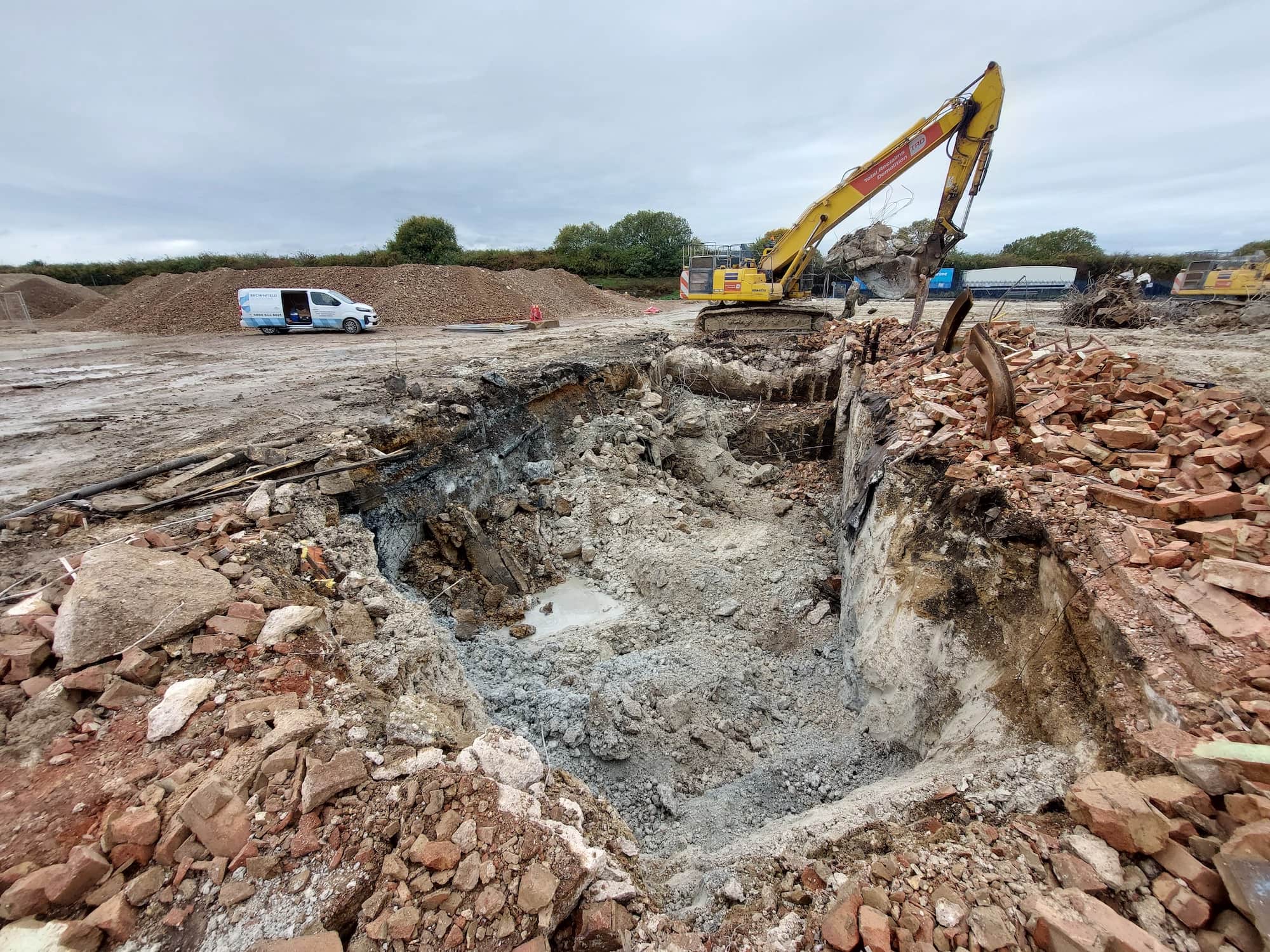
A bespoke remediation strategy was designed and implemented to provide betterment with respect to of controlled waters. This included source removal (underground fuel tanks etc) subsequent validation and monitoring of groundwater concentrations, including PFAS, which was found to be at low level and a result of both off site and localised on site sources.
DQRA was used to minimise the number of units which required VOC membranes.
A Materials Management Plan (MMP) was implemented which maximised re-use of recycled materials on-site within the current legislative framework.
Outcome
Ongoing pragmatic remediation, and verification of a complex brownfield site directly underlain by a principal chalk aquifer, to facilitate development and discharge of relevant planning conditions.
Value engineering including use of hydrocarbon vapour monitoring and DQRA to minimise the number of units requiring VOC membranes.